LOS ANGELES, CA, Jan. 01, 2026 (GLOBE NEWSWIRE) -- Defining "Best" in This Analysis: This article uses "best" to describe evaluation criteria and consumer search behavior, not to declare product superiority. The goal is to help readers understand what factors matter when comparing CBD gummies — not to rank or endorse specific products.
Disclaimer: This article is for informational purposes only and does not constitute medical or legal advice. CBD products are not intended to diagnose, treat, cure, or prevent any disease. These statements have not been evaluated by the Food and Drug Administration. Always consult a qualified healthcare professional before starting any new supplement. CBD product legality varies by jurisdiction — verify current federal and state laws in your area before purchasing. This article contains affiliate links. If you purchase through these links, a commission may be earned at no additional cost to you. This compensation does not influence the accuracy or integrity of the information presented.
Why "Best CBD Gummies 2026" Has Become January's Most Searched Wellness Term
January consistently represents the highest annual surge in CBD-related searches, driven by New Year routine resets, wellness goals, and increased interest in non-prescription supplement categories.
Something predictable happens every January. Millions of people who spent December indulging, stressing, and losing sleep suddenly decide that this year will be different. The wellness industry calls it the "New Year reset" — that window between January 1st and mid-February when supplement searches spike, gym memberships surge, and people finally act on health intentions they have been putting off.
CBD gummies sit at the intersection of several powerful January search trends. Consumer interest in natural wellness options, plant-based supplements, and non-prescription approaches to daily routines has grown significantly. People searching "best CBD gummies 2026" are typically looking for a framework to evaluate their options — not marketing claims.
Here is the challenge: The CBD market has exploded with choices, and most people have no systematic way to compare products. They have seen the ads. They are curious. Now they need real evaluation criteria before making a decision.
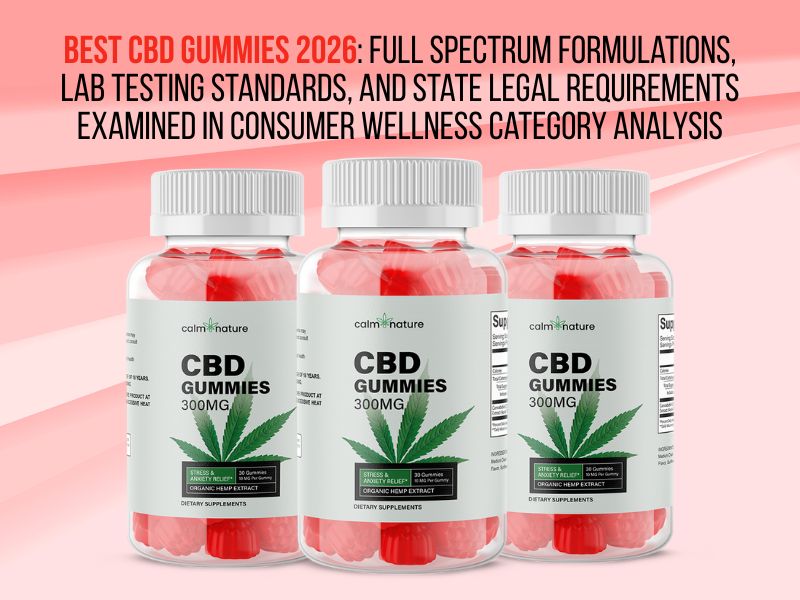
This analysis examines the factors informed consumers typically consider when comparing CBD gummies, using Calm Nature CBD Gummies as one example of how companies in the full spectrum category position their products.
View the current Calm Nature CBD Gummies offer (official Calm Nature page)
The 2026 CBD Gummies Evaluation Framework: What Informed Buyers Consider
Before examining any specific product, understanding the evaluation criteria that informed consumers use provides the foundation for comparison shopping.
Methodology Note: This analysis reflects publicly available information, regulatory guidance, published research, and common evaluation criteria used by informed consumers when comparing hemp-derived CBD gummy products. No products were tested, ranked, or endorsed. Company descriptions are presented as stated by the brands themselves and are included for illustrative, category-context purposes only.
The Five Factors Buyers Typically Evaluate
1. Spectrum Type (Full, Broad, or Isolate)
This represents the primary formulation distinction. Full spectrum products contain the range of cannabinoids naturally present in hemp, including trace THC within legal limits. Broad spectrum removes THC while retaining other cannabinoids. Isolate contains only CBD. Consumer preference varies based on individual priorities and circumstances.
2. Extraction Method
CO2 extraction is generally discussed as a cleaner method that avoids residual solvents. Ethanol and hydrocarbon methods are also used in the industry with varying quality outcomes depending on execution.
3. Third-Party Lab Testing (COA Verification)
Certificates of Analysis from independent laboratories verify that CBD content matches labels, THC stays within legal limits, and products are free from contaminants. This documentation helps consumers evaluate product claims.
4. Legal Compliance
Hemp-derived CBD containing less than 0.3% THC is federally legal under the 2018 Farm Bill, but state regulations vary. Understanding jurisdictional requirements helps consumers avoid compliance issues.
5. Company Transparency
Clear contact information, published policies, and accessible customer service indicate established business operations.
| Evaluation Factor | What Buyers Look For | Common Concerns |
| Spectrum Type | Clearly labeled formulation | Vague "hemp extract" without specification |
| Extraction | Disclosed extraction method | No method information provided |
| Lab Testing | Accessible COAs with batch numbers | Claims without documentation |
| Legal Status | Farm Bill compliance stated | No THC content disclosure |
| Company Info | Physical address, phone, email | Only web forms, no direct contact |
Consumer Interest in CBD Gummies for Sleep: What's Driving the Conversation
Consumer interest in CBD gummies related to sleep and nighttime routines has increased significantly. This section examines what's driving that interest and what the current research landscape looks like.
Why Consumers Are Exploring This Category
The growth in searches for CBD gummies related to sleep reflects broader consumer interest in non-prescription wellness approaches. Many people are curious about plant-based options as part of their nighttime routines.
It is important to note: Consumer interest does not establish efficacy. CBD gummies are supplements, not sleep medications, and have not been approved by the FDA for treating sleep disorders or any medical condition.
What Current Research Shows (And Doesn't Show)
A 2019 study published in The Permanente Journal (Shannon S, Lewis N, Lee H, Hughes S. "Cannabidiol in Anxiety and Sleep: A Large Case Series." Perm J. 2019;23:18-041) examined CBD in 72 adults and reported that sleep scores improved in 66.7% of participants during the first month.
Critical context this study does NOT establish:
- It was observational, not a controlled clinical trial
- Participants were also receiving psychiatric treatment
- It did not evaluate any consumer CBD gummy products
- Results fluctuated over time
- It does not support claims about specific products like Calm Nature
This research is cited here to illustrate the type of preliminary inquiry occurring in this space — not to imply that CBD gummies produce predictable outcomes for consumers.
The Realistic Perspective
Consumer interest in CBD gummies for nighttime routines has grown, driven by broader conversations around relaxation and non-prescription wellness approaches. Current research in this area remains exploratory and does not establish CBD gummies as a treatment for sleep disorders or medical conditions.
Individual experiences with CBD vary significantly. What one person finds useful, another may not notice at all. Consumers exploring this category should maintain realistic expectations and consult healthcare providers for sleep concerns.
Consumer Interest in CBD Gummies for Stress: Understanding the Category
Similar growth in consumer searches has occurred around CBD and stress-related topics. Understanding what's driving this interest — and what CBD gummies can and cannot do — helps set appropriate expectations.
What's Driving Consumer Curiosity
Many people are exploring plant-based wellness options as part of their daily routines. The CBD category has attracted interest from consumers curious about non-prescription approaches to general wellness.
Important distinction: Consumer curiosity does not establish product efficacy. As noted earlier, CBD gummies are supplements that have not been evaluated by the FDA for treating anxiety, stress disorders, or any medical condition.
The Critical Distinction
Everyday stress — work deadlines, traffic, family obligations — represents normal human experience that everyone navigates.
Clinical anxiety — persistent, excessive worry that interferes with daily functioning — requires professional evaluation and treatment.
CBD products occupy the wellness supplement space, not the pharmaceutical treatment space. Anyone experiencing persistent anxiety that affects daily life should consult a mental health professional rather than self-treating with supplements.
What Consumers Should Understand
Consumer interest in CBD gummies has increased, driven by broader conversations around relaxation, daily routines, and non-prescription wellness approaches. As noted earlier, current research remains exploratory and does not establish CBD gummies as a treatment for anxiety or stress disorders.
The same Permanente Journal study mentioned earlier found anxiety scores decreased in participants, but those participants were also receiving psychiatric treatment, making it impossible to isolate CBD's specific contribution. This study did not evaluate consumer gummy products.
Full Spectrum vs. Broad Spectrum vs. Isolate: Understanding the Differences
Understanding spectrum differences helps consumers identify which formulation type aligns with their preferences and circumstances.
Full Spectrum CBD
Full spectrum products contain the range of cannabinoids naturally present in hemp plants, including trace THC within the legal 0.3% threshold, along with other cannabinoids, terpenes, and flavonoids.
The "Entourage Effect" Concept:
Some researchers have theorized that cannabinoids may work differently when present together versus in isolation. This concept, while discussed in the industry, has not been definitively established through clinical research.
Considerations for Consumers:
- Contains trace THC (within legal limits)
- May not be appropriate for those with drug testing concerns
- Legal status varies in some states with stricter THC requirements
Broad Spectrum CBD
Broad spectrum undergoes additional processing intended to remove THC while retaining other cannabinoids.
Considerations for Consumers:
- Marketed as THC-free (verification via COA recommended)
- May appeal to those with drug testing considerations
- Processing may affect some plant compounds
CBD Isolate
Isolate contains only cannabidiol with other plant compounds removed.
Considerations for Consumers:
- Contains no THC
- Most predictable single-compound profile
- Lacks other cannabinoids present in full/broad spectrum
Spectrum Comparison
| Factor | Full Spectrum | Broad Spectrum | Isolate |
| THC Content | <0.3% | 0% (claimed) | 0% |
| Other Cannabinoids | Present | Partial | None |
| Processing Level | Minimal | Moderate | Maximum |
CBD Safety Profile: What Regulatory Bodies Have Stated
Understanding what regulatory and health organizations have said about CBD safety helps consumers evaluate the category with appropriate context.
World Health Organization Assessment
The World Health Organization's Expert Committee on Drug Dependence published a critical review of cannabidiol in 2018, stating that CBD "is generally well tolerated with a good safety profile" and that "to date, there is no evidence of recreational use of CBD or any public health-related problems associated with the use of pure CBD."
This assessment relates to CBD as a compound — not to specific consumer products, which vary in quality, formulation, and manufacturing standards.
FDA Position
The FDA has stated that existing regulatory frameworks for foods and dietary supplements are not appropriate for cannabidiol, and the agency continues to evaluate potential pathways. CBD products sold as supplements have not been evaluated by the FDA for safety or efficacy.
What This Means for Consumers
While CBD as a compound has been assessed favorably by international health bodies, consumer products vary significantly in quality. Third-party testing verification, company transparency, and realistic expectations remain important factors in consumer decision-making.
Drug Testing: The Complete Reality Check
This section contains critical information for consumers subject to drug testing.
No full spectrum CBD product can guarantee drug test outcomes. Even hemp-derived products may contain trace THC within legal limits, and individual metabolism, frequency of use, and testing sensitivity vary.
How Drug Tests Work
Standard employment drug screenings test for THC metabolites (THC-COOH), not CBD. Common cutoff thresholds are 50 ng/mL, though some employers use more sensitive thresholds.
CBD itself does not trigger positive drug tests. However, full spectrum CBD products contain trace THC within legal limits, creating theoretical detection risk.
Factors That May Influence Results
- Product type: Full spectrum contains trace THC; isolate does not
- Usage patterns: Frequency and amount of consumption
- Individual metabolism: How quickly the body processes compounds
- Test sensitivity: Different thresholds across testing protocols
- Body composition: THC metabolites are fat-soluble
What Calm Nature States (And What Consumers Should Understand)
According to Calm Nature's marketing materials, the company describes their products as processed through "triple filtration technology."
Critical consumer understanding: No full spectrum CBD product can guarantee drug test outcomes. Marketing claims about drug tests should be evaluated against the scientific reality that trace THC exists in full spectrum products, individual factors vary significantly, and no supplement company can control testing outcomes.
Consumers subject to drug testing should:
- Consider broad spectrum or isolate products instead
- Consult with employers about CBD policies
- Request COA documentation showing actual THC content
- Make informed decisions based on personal risk assessment
State-by-State Legal Realities for 2026
Understanding the legal landscape helps consumers verify compliance before purchasing.
Federal Status
Hemp-derived CBD products containing less than 0.3% THC by dry weight are federally legal under the Agriculture Improvement Act of 2018 (Farm Bill). This federal framework does not override state-level restrictions.
Because federal and state rules continue to evolve — including proposed and approved changes that may affect how hemp-derived products are defined and shipped — consumers should verify the most current requirements in their jurisdiction before ordering.
States With Stricter or Evolving Requirements
Idaho — Maintains a 0% THC requirement per state policy. Standard full spectrum products typically do not comply with Idaho law.
Nebraska — Has maintained stricter interpretations historically, with ongoing legislative activity. Consumers should verify current status through official state resources.
South Dakota — State hemp product policies continue to evolve. Consumers should confirm current rules directly through official state resources before purchasing.
Some states maintain stricter requirements or have evolving enforcement and legislative activity; consumers should confirm current rules directly through official state resources.
Additional Considerations
- Some states require CBD purchase from licensed retailers
- Workplace policies may prohibit CBD use regardless of legality
- International travel with CBD may create complications
Consumer Responsibility
CBD gummies derived from hemp containing less than 0.3% THC are legal in most U.S. jurisdictions. Consumers are responsible for verifying compliance with their specific state laws, employer policies, and any other applicable requirements.
What This Analysis Does Not Do
This article does not test products, provide medical guidance, predict individual outcomes, or recommend one CBD gummy over another. It is designed to help readers understand how informed consumers evaluate products in this category — not to tell anyone what they should purchase.
Calm Nature CBD Gummies: How One Company Positions in This Category
When comparing CBD products, examining how companies describe their offerings helps consumers understand category positioning. Calm Nature CBD Gummies represents one example of how companies in the full spectrum category present their products.
Company-Stated Formulation Details
According to Calm Nature's official website, the company describes their gummies as featuring:
- Full spectrum cannabinoid formulation
- Cold-pressed and unrefined CBD extraction
- CO2 extraction technology
- "Triple filtration technology" for THC processing
The company describes its gummies as designed for convenient daily use and highlights its extraction and filtration process in its marketing materials.
These descriptions represent company marketing claims. Consumers should verify specific claims through third-party documentation when available. As with any supplement, these descriptions reflect how the company presents its product and should be evaluated alongside independent verification, regulatory guidance, and individual consumer priorities.
Availability Information
According to information published by the company, Calm Nature offers multi-bottle purchase options with variable pricing and shipping terms. Current availability, package configurations, and refund policies are listed on the official Calm Nature website and may change without notice.
The company states a 60-day refund window with customer service contact required. Consumers should verify current terms directly before purchasing.
View the current Calm Nature CBD Gummies offer (official Calm Nature page)
What Manufacturers Provide on Product Labels
CBD gummy serving information is provided by manufacturers on product labels. Consumers typically review these instructions alongside healthcare guidance when evaluating whether a supplement fits their routine.
The FDA has not established standardized daily intake levels for CBD supplements. Serving sizes vary by product and manufacturer.
General Consumer Approaches:
Many consumers start with manufacturer-suggested servings and observe their individual response over time. Because CBD supplements are not standardized like pharmaceuticals, individual approaches vary.
Healthcare Consultation:
Anyone with health conditions, taking medications, or with specific concerns should consult healthcare providers before adding any supplement to their routine. CBD may interact with certain medications.
Who Might Explore This Category (And Who Should Consider Alternatives)
Rather than universal recommendations, a self-assessment approach helps consumers determine whether CBD gummies align with their specific situations.
Consumers Who Typically Explore Full Spectrum CBD Gummies:
- Those specifically interested in full spectrum formulations
- People who prefer the gummy supplement format
- Consumers who have verified legal compliance in their jurisdiction
- Those without drug testing concerns (or who have evaluated their specific situation)
- People with realistic expectations about supplements
Consumers Who May Want to Consider Alternatives:
- Those with strict drug testing requirements (consider isolate products)
- People in states with 0% THC requirements (full spectrum may not comply)
- Anyone seeking treatment for medical conditions (consult healthcare providers)
- Consumers taking medications (potential interactions — consult providers)
- Those who need faster onset (oils absorb differently than gummies)
Questions for Self-Assessment:
- What am I hoping to explore with CBD supplements?
- Do I have any drug testing considerations?
- Have I verified CBD legality in my state?
- Have I consulted with my healthcare provider?
- Are my expectations realistic about what supplements can and cannot do?
How to Evaluate CBD Product Quality
With many CBD products available, systematic evaluation helps consumers compare options.
Step 1: Review Third-Party Lab Documentation
Certificates of Analysis from independent laboratories help verify:
- CBD content relative to label claims
- THC content within legal limits
- Absence of contaminants (heavy metals, pesticides, solvents)
COAs should be current, batch-specific, and from named laboratories.
Step 2: Evaluate Transparency
Quality indicators include:
- CBD content clearly stated per serving
- Spectrum type clearly labeled
- Hemp source disclosed
- Complete ingredient list available
- Company contact information accessible
Step 3: Research Company Background
Consumers often review:
- Business history and establishment
- Customer service accessibility
- Return policy clarity
- Third-party reviews across platforms
Step 4: Consider Value Relative to Market
CBD gummy pricing varies across the market. Extremely low pricing may indicate quality concerns. High pricing does not guarantee quality. Consumers typically evaluate value relative to verification, transparency, and company reputation rather than price alone.
Common Questions About CBD Gummies
Is Full Spectrum CBD Legal in All States in 2026?
Hemp-derived CBD products containing less than 0.3% THC are federally legal under the 2018 Farm Bill. However, some states maintain stricter requirements. Idaho requires 0% THC. Nebraska and South Dakota have evolving legislative and enforcement activity. Because federal and state rules continue to change, consumers should verify current requirements through official state resources before purchasing.
Do CBD Gummies Interact With Prescription Medications?
CBD may interact with certain medications, particularly those metabolized by the cytochrome P450 enzyme system. Anyone taking prescription medications should consult their healthcare provider before using CBD supplements. This is especially important for blood thinners, heart medications, immunosuppressants, and other drugs where interactions could affect efficacy or safety.
How Are CBD Gummies Different From CBD Oils or Capsules?
The primary differences relate to absorption and convenience. Gummies require digestion before cannabinoids reach the bloodstream, typically taking 30-60 minutes or longer. Sublingual oils are held under the tongue for faster absorption. Capsules function similarly to gummies in terms of digestion time. Gummies offer pre-measured servings and a familiar format, while oils allow more flexible serving adjustments.
Additional Frequently Asked Questions
Are CBD gummies legal in 2026?
Hemp-derived CBD products containing less than 0.3% THC are federally legal under the 2018 Farm Bill. Some states maintain stricter requirements. Consumers should verify their specific state's regulations.
Will CBD gummies produce intoxicating effects?
CBD is non-psychoactive. Full spectrum products contain trace THC within legal limits (under 0.3%), which is not sufficient to produce intoxicating effects for most people.
How long before effects might be noticed?
Gummies require digestion before absorption, typically 30-60 minutes or longer depending on individual factors. This varies significantly between individuals.
Can CBD gummies be taken with medications?
CBD may interact with certain medications. Anyone taking prescription medications should consult their healthcare provider before using CBD supplements.
Will CBD gummies affect drug tests?
No full spectrum CBD product can guarantee drug test outcomes. Full spectrum products contain trace THC. Consumers with drug testing concerns should consider isolate products and consult with employers about policies.
What is the difference between hemp gummies and CBD gummies?
"Hemp gummies" may refer to products made with hemp seed oil (no cannabinoids) or CBD products from hemp. Consumers should verify CBD content is specifically stated.
Final Perspective: Evaluating CBD Gummies for 2026
As consumers evaluate CBD options heading into 2026, the market offers extensive choices — making systematic evaluation more valuable than ever.
What This Analysis Covered
This consumer category analysis examined the evaluation criteria informed buyers typically consider when comparing CBD gummies:
- Spectrum type differences and implications
- Lab testing verification importance
- Legal compliance considerations
- Drug testing realities
- Company transparency indicators
Calm Nature CBD Gummies was referenced as one example of how companies in the full spectrum category position their products — not as a ranked recommendation.
The Consumer's Role
The "best" CBD gummy depends entirely on individual circumstances, preferences, and priorities. Factors like drug testing requirements, state regulations, healthcare considerations, and personal preferences all influence which products may be appropriate for specific consumers.
Realistic Expectations
CBD gummies are supplements in a category that has attracted significant consumer interest. They are not medications, have not been FDA-approved for treating any condition, and individual experiences vary widely.
Consumers exploring this category benefit from:
- Realistic expectations about supplements
- Verification of legal compliance
- Healthcare consultation when appropriate
- Systematic product evaluation
- Understanding that individual results vary
View the current Calm Nature CBD Gummies offer (official Calm Nature page)
Contact: care@calmnaturecbd.com
Disclaimers
FDA Disclaimer: These statements have not been evaluated by the Food and Drug Administration. This product is not intended to diagnose, treat, cure, or prevent any disease. The FDA has stated that existing regulatory frameworks for foods and dietary supplements are not appropriate for cannabidiol, and the agency continues to evaluate potential pathways. Always consult your physician before starting any new supplement.
Legal Disclaimer: CBD product legality varies by jurisdiction. Hemp-derived CBD containing less than 0.3% THC is federally legal under the 2018 Farm Bill. Some states maintain stricter requirements including Idaho's 0% THC threshold. Federal and state regulations continue to evolve and may affect how hemp-derived products are defined and sold. Users are responsible for verifying compliance with all applicable current laws. This article does not constitute legal advice.
Medical Disclaimer: This article is educational and does not constitute medical advice. CBD supplements are not medications. Anyone with health conditions, taking medications, pregnant or nursing, should consult healthcare providers before using CBD supplements.
Drug Testing Disclaimer: No full spectrum CBD product can guarantee drug test outcomes. Even hemp-derived products may contain trace THC within legal limits, and individual metabolism, frequency of use, and testing sensitivity vary. Consumers subject to drug testing should evaluate their specific circumstances carefully.
Results Disclaimer: Individual experiences vary based on numerous factors. CBD supplements should not be expected to produce predictable outcomes. Nothing in this article guarantees specific results.
Affiliate Disclosure: This article contains affiliate links. Purchases through these links may result in commission at no additional cost to you. This compensation does not influence editorial content.
Research Citations: Shannon S, Lewis N, Lee H, Hughes S. Cannabidiol in Anxiety and Sleep: A Large Case Series. Perm J. 2019;23:18-041. doi:10.7812/TPP/18-041. This study is cited for general market context only and did not evaluate Calm Nature or any consumer CBD gummy product.
World Health Organization. Cannabidiol (CBD) Critical Review Report. Expert Committee on Drug Dependence, Fortieth Meeting, Geneva, 4-7 June 2018. This assessment relates to CBD as a compound and does not constitute endorsement of any consumer product.
Consumer Wellness Category Analysis Published: January 2026

Contact: care@calmnaturecbd.com