TTW Reveals the 50 Best Airports in the World for 2026
PR Newswire
NEW YORK, Jan. 10, 2026
NEW YORK, Jan. 10, 2026 /PRNewswire/ -- Travel and Tour World (TTW) today releases 50 Best Airports in the World for 2026, a definitive global ranking that evaluates airports based on the depth, scale, and integration of smart technologies transforming the passenger journey and airport operations.
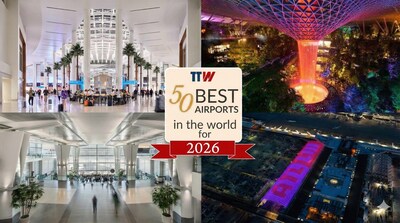
The 2026 ranking highlights a decisive shift in global aviation, where artificial intelligence, biometric processing, digital twins, automation, predictive analytics, and sustainability-driven smart systems are no longer pilots or add-ons, but core operational infrastructure.
"The 50 Best Airports for 2026 represents a pivotal shift where technology is no longer a luxury, but the very pulse of global aviation, meeting the high-performance demands of digital nomads through Gen Z technology. As global passengers carry higher expectations for efficiency and environmental responsibility, these rankings highlight the hubs that have successfully integrated AI and predictive analytics to turn the vision of an easy trip into a seamless, sustainable reality," says Anup Kumar Keshan, Founder and Editor-in-Chief of Travel and Tour World.
"Crucially, sustainability is no longer a parallel initiative but a core outcome of these smart designs, ensuring that increased capacity doesn't come at the cost of our planet. This comprehensive research is powered by the first-hand experiences of 15 million users and backed by our rigorous editorial insights to define the new gold standard in travel."
Global Smart Airport Leaders – Fully Integrated Ecosystems
Leading the global index are airports demonstrating the most advanced, end-to-end smart airport ecosystems currently in operation. These airports have embedded artificial intelligence, biometrics, automation, digital twins, and real-time data intelligence across passenger journeys, airside and landside operations, and long-term infrastructure planning—setting the global benchmark for intelligent aviation infrastructure.
Indent | Airport Name | Location |
1 | Dubai International (DXB) | Middle East |
2 | Singapore Changi (SIN) | Asia-Pacific |
3 | San Francisco International (SFO) | North America |
4 | Hartsfield-Jackson Atlanta International (ATL) | North America |
5 | London Heathrow (LHR) | Europe |
6 | Vancouver International (YVR) | North America |
7 | Istanbul Airport (IST) | Europe / Eurasia |
8 | Toronto Pearson International (YYZ) | North America |
9 | Doha Hamad International (DOH) | Middle East |
10 | Seoul Incheon (ICN) | Asia-Pacific |
11 | Tokyo Haneda (HND) | Asia-Pacific |
12 | Los Angeles International (LAX) | North America |
13 | Paris Charles de Gaulle (CDG) | Europe |
14 | Cape Town International (CPT) | Africa |
15 | Bengaluru Kempegowda International (BLR) | Asia-Pacific |
16 | Frankfurt Airport (FRA) | Europe |
17 | Orlando International (MCO) | North America |
18 | Dallas Fort Worth (DFW) | North America |
19 | Bangkok Suvarnabhumi (BKK) | Asia-Pacific |
20 | Tokyo Narita (NRT) | Asia-Pacific |
21 | New York JFK (JFK) | North America |
22 | Berlin Brandenburg (BER) | Europe |
23 | Munich Airport (MUC) | Europe |
24 | Miami International (MIA) | North America |
25 | Shanghai Hongqiao (SHA) | Asia-Pacific |
26 | Denver International (DEN) | North America |
27 | Seattle-Tacoma (SEA) | North America |
28 | Shenzhen Bao'an (SZX) | Asia-Pacific |
29 | Brussels Airport (BRU) | Europe |
30 | Hong Kong International (HKG) | Asia-Pacific |
31 | Rome Fiumicino (FCO) | Europe |
32 | Amsterdam Schiphol (AMS) | Europe |
33 | Helsinki-Vantaa (HEL) | Europe |
34 | Abu Dhabi Zayed International (AUH) | Middle East |
35 | Sydney Kingsford Smith (SYD) | Australia / Oceania |
36 | Zurich Airport (ZRH) | Europe |
37 | Madrid Barajas (MAD) | Europe |
38 | Vienna International (VIE) | Europe |
39 | Chicago O'Hare (ORD) | North America |
40 | Oslo Gardermoen (OSL) | Europe |
41 | Barcelona El Prat (BCN) | Europe |
42 | Copenhagen Airport (CPH) | Europe |
43 | San Jose Mineta (SJC) | North America |
44 | Washington Reagan National (DCA) | North America |
45 | Milan Malpensa (MXP) | Europe |
46 | Riyadh King Khalid (RUH) | Middle East |
47 | Kuala Lumpur International (KUL) | Asia-Pacific |
48 | Lisbon Humberto Delgado (LIS) | Europe |
49 | Jakarta Soekarno-Hatta (CGK) | Asia-Pacific |
50 | Houston George Bush Intercontinental (IAH) | North America |
Advanced Automation & AI-Driven Operational Leaders
This category highlights airports operating large-scale automation and AI-enabled decision systems that significantly enhance efficiency, security, and passenger flow. While not all systems are fully unified end-to-end, these airports demonstrate mature, high-impact deployments across multiple operational domains and continue advancing toward fully integrated smart ecosystems.
High-Impact Regional Technology Leaders
Airports in this category play a critical role in elevating smart airport standards within their respective regions. Their technology strategies emphasize automation, biometric processing, AI-supported security, and advanced terminal systems that deliver measurable operational and passenger experience improvements, even where scale or full ecosystem integration remains selective.
Emerging Smart Airport Leaders and Expansion-Driven Innovators
This group includes airports actively transitioning into advanced smart hubs through terminal expansions and infrastructure upgrades. Technology adoption is closely aligned with growth programs, with biometrics, automation, and integrated data platforms embedded into new or redeveloped facilities—signaling strong momentum toward higher smart maturity.
Smart Transformation Airports in Advanced Markets
These airports are undergoing structured digital transformation, modernizing legacy infrastructure through phased adoption of smart security, passenger flow analytics, automation, and centralized data platforms. They represent established aviation markets moving decisively toward intelligent, technology-enabled operations.
Selective Technology Adoption and Scaled Integration
Airports in this category have implemented strong smart systems in specific operational areas—such as security, baggage handling, terminal analytics, or sustainability—but with partial ecosystem integration. Their approach reflects targeted investment strategies rather than full-scale smart airport transformation.
High-Potential Airports at Early Stages of Smart Transformation
Representing the next wave of smart airport evolution, these airports are at early or narrowly focused stages of technology deployment. Initial investments in automation, biometrics, and digital integration provide a strong foundation for accelerated advancement as infrastructure, policy, and funding frameworks mature.
The 50 Best Airports in the World for 2026
Leading the global index are airports that represent the most advanced, end-to-end smart airport ecosystems in operation today:
- Dubai International – Middle East
Dubai International leads global smart airport innovation through advanced biometrics, AI-driven passenger flow optimization, real-time operations control, and integrated security systems. Its technology-first approach enhances efficiency across terminals, baggage handling, and retail ecosystems, while data-led decision-making, automation, and seamless connectivity reinforce DXB's role as a benchmark for high-capacity, technology-enabled aviation hubs.
2. Singapore Changi – Asia-Pacific
Singapore Changi exemplifies intelligent airport design through AI-enabled passenger flow management, touchless biometrics, smart retail analytics, and predictive maintenance systems. Its technology ecosystem integrates passenger experience, operational resilience, and sustainability, supported by advanced data platforms and automation across terminals, baggage handling, and airfield operations, reinforcing its status as a global smart airport leader.
3. San Francisco International – North America
San Francisco International advances smart airport operations through digital twin modeling, sustainability-focused infrastructure, automated people movers, and integrated data platforms. Its emphasis on green technology, advanced analytics, and passenger-centric digital services supports efficient terminal management, optimized resource utilization, and seamless multimodal connectivity, positioning SFO as a technology-forward gateway on the US West Coast.
4. Hartsfield-Jackson Atlanta International – North America
Hartsfield-Jackson Atlanta leverages large-scale automation, real-time operations analytics, and advanced security technologies to manage the world's busiest passenger volumes. AI-driven scheduling, biometric screening, and smart baggage systems enhance throughput and reliability, while centralized command platforms enable predictive decision-making, ensuring resilience, efficiency, and scalability across its expansive airfield and terminal network.
5. London Heathrow – Europe
London Heathrow integrates smart security, biometrics, and advanced air traffic coordination systems to support high-density international operations. Data-driven passenger forecasting, automated baggage handling, and intelligent terminal management improve flow efficiency and service reliability, while sustainability technologies and digital transformation initiatives reinforce Heathrow's role as a technologically mature global aviation hub.
6. Vancouver International – North America
Vancouver International combines passenger-focused digital services with advanced border processing, smart security screening, and predictive operations management. Its investment in biometrics, real-time analytics, and sustainability-driven infrastructure enables efficient international connectivity, improved passenger experience, and resilient terminal operations, positioning YVR as a leading smart gateway between North America and Asia-Pacific markets.
7. Istanbul Airport – Europe / Eurasia
Istanbul Airport showcases large-scale smart infrastructure through centralized operations control, AI-powered passenger flow optimization, and advanced security integration. Designed for future scalability, its digital ecosystem supports automated baggage systems, real-time analytics, and intelligent facility management, enabling seamless connectivity across Europe, Asia, and the Middle East within one of the world's largest aviation complexes.
8. Toronto Pearson International – North America
Toronto Pearson applies smart airport technologies including biometric processing, predictive analytics, and automated baggage systems to enhance operational efficiency. Integrated data platforms support passenger flow optimization and airside coordination, while digital wayfinding and contactless services improve traveler experience, reinforcing Pearson's role as Canada's most technologically advanced and globally connected aviation hub.
9. Doha Hamad International – Middle East
Hamad International demonstrates advanced smart airport integration through biometrics, AI-enabled security, automated baggage handling, and real-time operations monitoring. Its technology ecosystem prioritizes passenger comfort, precision operations, and sustainability, supported by intelligent building systems and data-driven decision platforms that position DOH as a leading next-generation global transit hub.
10. Seoul Incheon – Asia-Pacific
Seoul Incheon leads smart airport innovation with robotics, AI-powered immigration, biometric boarding, and predictive maintenance systems. Its digital infrastructure integrates passenger services, airside operations, and logistics through centralized data platforms, enabling high efficiency, resilience, and seamless connectivity, reinforcing ICN's reputation as one of the world's most technologically advanced aviation hubs.
11. Tokyo Haneda – Asia-Pacific
Tokyo Haneda integrates precision technology, automated security screening, and real-time operations analytics to support high-frequency domestic and international traffic. Smart terminal systems, biometric processing, and efficient baggage automation enhance throughput and reliability, while continuous digital upgrades ensure a seamless, punctual, and passenger-centric airport experience aligned with Japan's advanced mobility standards.
12. Los Angeles International – North America
Los Angeles International is undergoing a large-scale smart transformation featuring automated people movers, advanced security screening, and integrated digital wayfinding. Data-driven terminal management, biometric trials, and sustainability-focused infrastructure upgrades enhance passenger flow and operational efficiency, positioning LAX as a future-ready global gateway supporting complex international and domestic travel demands.
13. Paris Charles de Gaulle – Europe
Paris Charles de Gaulle employs smart airport technologies including biometric identity management, advanced baggage automation, and centralized operations control. Digital platforms support passenger flow optimization and airside efficiency, while sustainability initiatives and intelligent terminal systems improve resilience and service quality, reinforcing CDG's role as a major technologically enabled European aviation hub.
14. Cape Town International – Africa
Cape Town International advances smart airport capabilities through digital security systems, energy-efficient infrastructure, and data-enabled terminal management. Technology investments enhance passenger processing, operational visibility, and sustainability performance, positioning CPT as a leading African airport integrating intelligent systems to support growing international connectivity and resilient, environmentally responsible operations.
15. Bengaluru Kempegowda International – Asia-Pacific
Bengaluru Kempegowda International showcases smart airport leadership through biometric processing, AI-driven operations management, and digitally integrated terminals. Its technology ecosystem supports passenger flow optimization, automated baggage handling, and sustainability-led design, reinforcing BLR's position as India's most technologically progressive airport serving a fast-growing global innovation and business hub.
16. Frankfurt Airport – Europe
Frankfurt Airport leverages advanced automation, AI-powered logistics, and centralized operations control to manage complex international traffic. Smart security screening, predictive maintenance, and data-driven passenger forecasting enhance efficiency and reliability, while digital transformation initiatives support scalability, sustainability, and Frankfurt's role as one of Europe's most technologically sophisticated aviation hubs.
17. Orlando International – North America
Orlando International integrates smart terminal design, automated people movers, and advanced security screening to support high leisure traffic volumes. Digital wayfinding, real-time operations analytics, and biometric processing enhance passenger flow and operational efficiency, positioning MCO as a technology-enabled gateway optimized for peak seasonal demand and family-oriented travel experiences.
18. Dallas Fort Worth – North America
Dallas Fort Worth employs intelligent airfield management, automated baggage systems, and predictive analytics to support large-scale hub operations. Integrated data platforms enhance aircraft movement efficiency, passenger processing, and terminal coordination, while continuous digital upgrades reinforce DFW's position as one of North America's most operationally advanced and resilient aviation hubs.
19. Bangkok Suvarnabhumi – Asia-Pacific
Bangkok Suvarnabhumi integrates smart security systems, automated passenger processing, and centralized airport management platforms. Technology-driven upgrades enhance capacity handling, baggage efficiency, and terminal coordination, supporting Thailand's growing aviation demand while positioning BKK as a key smart gateway connecting Southeast Asia with global travel markets.
20. Tokyo Narita – Asia-Pacific
Tokyo Narita applies advanced security screening, biometric processing, and data-driven operations management to support long-haul international travel. Smart terminal systems, automated baggage handling, and predictive analytics enhance efficiency and reliability, reinforcing Narita's role as a technologically refined global gateway aligned with Japan's precision-driven aviation standards.
21. New York JFK – North America
John F. Kennedy International is undergoing a comprehensive smart airport redevelopment featuring biometric identity systems, advanced security screening, and integrated terminal technologies. Data-driven passenger flow management, automated baggage systems, and digital infrastructure upgrades enhance efficiency, resilience, and passenger experience across one of the world's most complex international aviation hubs.
22. Berlin Brandenburg – Europe
Berlin Brandenburg integrates modern smart airport systems including centralized operations control, automated security screening, and digital passenger services. Technology investments support efficient terminal coordination, real-time monitoring, and scalable infrastructure, positioning BER as a future-ready European airport designed to meet evolving connectivity, sustainability, and operational performance standards.
23. Munich Airport – Europe
Munich Airport leverages intelligent terminal systems, biometric processing, and predictive analytics to enhance passenger experience and operational efficiency. Integrated digital platforms support airside coordination, baggage automation, and energy management, reinforcing Munich's reputation for precision, reliability, and technological maturity within Europe's leading aviation hubs.
24. Miami International – North America
Miami International deploys smart security, biometric trials, and data-driven terminal management to support high international and cargo traffic. Advanced analytics enhance passenger flow, customs processing, and airside efficiency, positioning MIA as a technologically evolving gateway connecting North America with Latin America and global long-haul markets.
25. Shanghai Hongqiao – Asia-Pacific
Shanghai Hongqiao integrates smart mobility systems, biometric processing, and real-time operations management within a multimodal transport hub. Advanced digital infrastructure enhances passenger flow, intermodal connectivity, and terminal efficiency, positioning Hongqiao as a technologically advanced urban airport supporting China's high-density domestic and regional travel networks.
26. Denver International – North America
Denver International applies intelligent airfield management, automated baggage handling, and predictive analytics to manage high-altitude, weather-variable operations. Smart infrastructure enhances resilience, capacity planning, and passenger processing, while sustainability-focused technologies reinforce DEN's reputation as a forward-looking airport built for long-term scalability and operational efficiency.
27. Seattle-Tacoma – North America
Seattle-Tacoma integrates smart terminal upgrades, biometric boarding, and advanced baggage automation to support growing international demand. Data-driven operations management and sustainability initiatives enhance efficiency and passenger experience, positioning SEA as a technology-enabled Pacific gateway aligned with the innovation-driven culture of the US Pacific Northwest.
28. Shenzhen Bao'an – Asia-Pacific
Shenzhen Bao'an exemplifies next-generation smart airport design through AI-powered security, facial recognition, robotics, and centralized digital operations. Its technology ecosystem supports seamless passenger journeys, high automation, and efficient terminal management, reinforcing Shenzhen's role as a global technology hub reflected in its advanced aviation infrastructure.
29. Brussels Airport – Europe
Brussels Airport employs smart security screening, real-time operations analytics, and digital passenger services to enhance efficiency and resilience. Integrated data platforms support baggage handling, airside coordination, and sustainability management, positioning BRU as a technologically progressive European hub serving both passenger and cargo-focused aviation markets.
30. Hong Kong International – Asia-Pacific
Hong Kong International leads smart airport adoption through biometrics, AI-driven operations control, and advanced baggage automation. Its technology ecosystem supports high-capacity international transit, predictive decision-making, and seamless passenger processing, reinforcing HKG's status as one of the world's most efficient and technologically sophisticated global aviation hubs.
31. Rome Fiumicino – Europe
Rome Fiumicino integrates smart terminal technologies, biometric screening, and centralized airport management systems. Digital transformation initiatives enhance passenger flow, baggage efficiency, and operational visibility, while sustainability-focused upgrades reinforce FCO's position as a modern European gateway balancing heritage, capacity growth, and intelligent infrastructure development.
32. Amsterdam Schiphol – Europe
Amsterdam Schiphol applies advanced passenger flow analytics, automated security screening, and integrated operations control to optimize high-density traffic. Smart infrastructure supports efficient terminal coordination, predictive capacity management, and sustainability performance, positioning Schiphol as a digitally mature aviation hub renowned for innovation and operational efficiency.
33. Helsinki-Vantaa – Europe
Helsinki-Vantaa leverages smart security, biometric processing, and AI-driven operations management to support efficient long-haul and regional connectivity. Its technology-focused terminal design enhances passenger flow, energy efficiency, and operational resilience, reinforcing HEL's role as a leading Nordic hub optimized for Asia-Europe transit traffic.
34. Abu Dhabi Zayed International – Middle East
Zayed International Airport integrates advanced biometrics, automated baggage systems, and intelligent building technologies within a next-generation terminal environment. Data-driven operations management enhances efficiency, passenger comfort, and scalability, positioning AUH as a strategically designed smart hub supporting Abu Dhabi's global aviation and economic ambitions.
35. Sydney Kingsford Smith – Australia / Oceania
Sydney Kingsford Smith applies smart security screening, digital passenger services, and predictive operations analytics to manage constrained airfield capacity. Technology investments enhance passenger flow, sustainability performance, and operational reliability, positioning SYD as a modernized gateway balancing high demand with intelligent infrastructure upgrades.
36. Zurich Airport – Europe
Zurich Airport employs precision-focused smart systems including biometric processing, automated baggage handling, and real-time operations control. Integrated digital platforms enhance efficiency, punctuality, and passenger experience, reinforcing Zurich's reputation for reliability and technological excellence within Europe's most operationally disciplined aviation environments.
37. Madrid Barajas – Europe
Madrid Barajas integrates smart terminal management, biometric identity solutions, and data-driven passenger forecasting to support large-scale international connectivity. Advanced automation and centralized operations platforms enhance efficiency and resilience, positioning MAD as a technologically evolving hub linking Europe with Latin America and global long-haul markets.
38. Vienna International – Europe
Vienna International applies intelligent security systems, automated baggage handling, and predictive analytics to optimize passenger processing and airside operations. Digital integration enhances efficiency, service quality, and scalability, reinforcing Vienna's role as a technologically mature Central European hub supporting both legacy and low-cost carriers.
39. Chicago O'Hare – North America
Chicago O'Hare leverages smart airfield management, advanced security screening, and data-driven terminal coordination to support complex hub operations. Automation and analytics enhance aircraft movement efficiency, passenger flow, and resilience, positioning ORD as a technologically evolving cornerstone of North America's aviation network.
40. Oslo Gardermoen – Europe
Oslo Gardermoen integrates smart energy management, biometric processing, and advanced terminal analytics to support sustainable and efficient operations. Technology-led design enhances passenger flow, environmental performance, and operational resilience, positioning OSL as a leading example of intelligent, sustainability-driven airport development in the Nordic region.
41. Barcelona El Prat – Europe
Barcelona El Prat applies smart security screening, automated baggage systems, and centralized operations management to support high tourism-driven demand. Digital platforms enhance passenger flow efficiency, terminal coordination, and service quality, positioning BCN as a technologically advancing Mediterranean hub balancing capacity growth with intelligent infrastructure.
42. Copenhagen Airport – Europe
Copenhagen Airport integrates smart passenger processing, real-time operations analytics, and sustainability-focused technologies. Digital systems support efficient terminal management, baggage handling, and energy optimization, reinforcing CPH's reputation as a technologically mature Nordic hub emphasizing operational efficiency, environmental responsibility, and passenger-centric design.
43. San Jose Mineta – North America
San Jose Mineta reflects Silicon Valley innovation through smart terminal systems, advanced security screening, and data-driven operations management. Technology integration enhances passenger experience, operational efficiency, and sustainability performance, positioning SJC as a digitally progressive regional airport aligned with the surrounding global technology ecosystem.
44. Washington Reagan National – North America
Washington Reagan National applies intelligent security systems, real-time operations monitoring, and passenger flow analytics within a constrained urban environment. Smart infrastructure enhances efficiency, safety, and service reliability, positioning DCA as a technology-enabled domestic hub optimized for high-frequency, short-haul government and business travel.
45. Milan Malpensa – Europe
Milan Malpensa integrates smart terminal technologies, automated baggage handling, and digital passenger services to support long-haul and cargo operations. Data-driven airport management enhances efficiency, scalability, and service quality, positioning MXP as a technologically advancing northern Italian gateway within Europe's global aviation network.
46. Riyadh King Khalid – Middle East
Riyadh King Khalid Airport deploys smart security, biometric processing, and centralized operations platforms as part of Saudi Arabia's aviation modernization strategy. Technology investments enhance passenger throughput, operational visibility, and scalability, positioning RUH as an emerging smart hub supporting the Kingdom's Vision 2030 connectivity goals.
47. Kuala Lumpur International – Asia-Pacific
Kuala Lumpur International integrates smart terminal systems, automated baggage handling, and real-time operations analytics. Digital upgrades enhance passenger flow, security efficiency, and service reliability, positioning KLIA as a technologically evolving Southeast Asian hub supporting growing regional and intercontinental aviation demand.
48. Lisbon Humberto Delgado – Europe
Lisbon Humberto Delgado applies smart passenger processing, automated security screening, and data-driven terminal coordination to manage rising tourism volumes. Technology integration enhances operational efficiency and passenger experience, positioning LIS as a digitally modernizing European gateway connecting Western Europe with transatlantic and African routes.
49. Jakarta Soekarno-Hatta – Asia-Pacific
Jakarta Soekarno-Hatta employs smart terminal management, biometric processing, and centralized airport control systems to support high passenger volumes. Digital transformation initiatives enhance efficiency, capacity handling, and resilience, positioning CGK as a technologically advancing mega-hub serving Southeast Asia's fastest-growing aviation market.
50. Houston George Bush Intercontinental – North America
Houston George Bush Intercontinental integrates smart airfield management, automated baggage systems, and predictive analytics to support extensive international and domestic connectivity. Data-driven operations enhance efficiency, safety, and scalability, positioning IAH as a technologically robust hub serving energy, business, and long-haul global travel markets.
"Smart airports are no longer defined by isolated technology deployments, but by how deeply intelligence is embedded across operations, passenger experience, sustainability, and enterprise decision-making. The 2026 rankings recognize airports that have moved decisively beyond experimentation into scaled, real-world execution. Where AI, biometrics, automation, and integrated data ecosystems function as mission-critical infrastructure" said Anup Kumar Keshan, Founder and Editor-in-Chief, Travel and Tour World (TTW).
Defining the Smart Airport Era
According to TTW, the 2026 rankings reflect a clear industry direction: airports are evolving into intelligent mobility platforms, where technology directly influences resilience, capacity optimization, passenger satisfaction, and environmental performance.
From biometric-enabled passenger journeys and AI-driven air traffic coordination to digital twins and autonomous systems, the airports featured in this year's list are shaping the future of global aviation.
Earlier Travel And Tour World has published Top 50 Countries of the World as Best Travel Destinations for 2026, 50 Best Destinations of World for UK Travellers in 2026, Top 50 Destinations Around the World for US Travelers in 2026 and Top 50 Adventure Travel Destinations of the World for 2026.
Research Methodology
The 50 Best Airports in the World for 2026 was compiled through extensive research and analysis, drawing on publicly available airport authority information, industry reports and technology deployment disclosures. The assessment focused on the maturity, scale, and integration of smart technologies supporting airport operations, passenger experience, and sustainable travel initiatives, including energy efficiency, emissions reduction, and resource optimization, rather than pilot programs or future announcements. This definitive ranking is fueled by the real-world experiences of 15 million users of TTW and sharpened by expert editorial insights to establish a new global benchmark for the aviation industry
About Travel and Tour World
Travel and Tour World (TTW) is a premier global digital B2B travel media platform reaching over 15 million readers worldwide across 104 regional platforms in European, Asian, African, GCC, and Indian languages. Since 2009, TTW has been a trusted source of travel and tourism industry news, intelligence, and trend analysis.
As an official media partner to more than 1,500 international travel and hospitality events, including WTM, ITB Berlin, ITB Asia, IMEX America, IMEX Frankfurt, and ATM, TTW connects tourism boards, airlines, hotels, tour operators, MICE planners, and luxury travel brands with global industry decision-makers. With its unmatched multilingual reach and editorial credibility, TTW continues to shape conversations that define the future of global travel.
Media Contact
Tuhin Sarkar
Travel And Tour World
+1 917-677-7753
pr@travelandtourworld.com
Visit us on social media:
LinkedIn, Instagram, Facebook, YouTube, X

 View original content to download multimedia:https://www.prnewswire.com/news-releases/ttw-reveals-the-50-best-airports-in-the-world-for-2026-302657838.html
SOURCE Travel And Tour World

